Water recovery around occupied spaces

Commercial Water Damage in Drexel Heights

A water loss in an occupied building affects more than the wet finish. Cleanup must account for access routes, scheduled room use, stored contents and the separation of work from daily activity.

(888) 949-8496Review the building recovery priorities
Occupied access planning Room by room scope Documented repair handoff
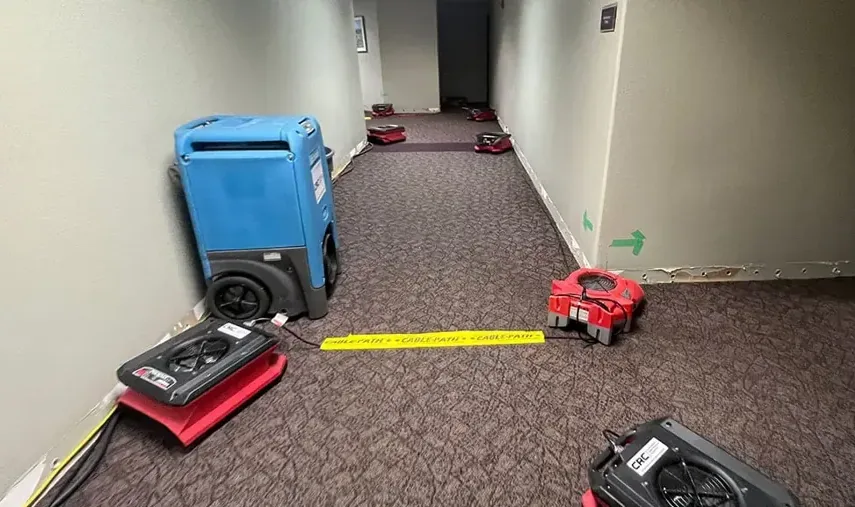
Dehumidifier and several air movers positioned along a carpeted hallway
Immediate priorities

Commercial Water Damage: first steps

  1. 1

    Name the responsible site contact

    Name the contact who arranges entry and approves changes. This person coordinates source repair, describes occupied spaces and communicates restrictions to building users during cleanup.

  2. 2

    Keep traffic outside the affected route

    Mark the wet area through the site's normal access controls and direct occupants toward a safe alternative where available. Do not route people past sagging material or through standing water to maintain normal room use.

  3. 3

    Describe sensitive contents and equipment

    Tell the assessor about stored documents, powered equipment and materials that cannot be moved casually. Handling plans should reflect the contents and access conditions before extraction hoses or debris removal routes are established inside.

  4. 4

    Record the operating constraints

    Share room schedules, locked spaces and any restrictions on equipment placement. The assessment can then explain how the cleanup boundary affects building use and which operations need coordination while water recovery and drying proceed.

Assessment and control

How commercial water damage is handled

Rapid local response

The response team prioritizes active water movement and unsafe access. The first assessment separates source control from extraction, so a stopped leak does not leave hidden wet materials untreated.

IICRC S500 drying standard

The drying specialist sets a material-specific goal using unaffected reference readings. Airflow and dehumidification follow the evaporation load, with equipment adjusted when the daily measurements show a change.

Claim-ready documentation

The project file records the water source, affected rooms, material condition and work performed. Photographs and moisture logs let the owner and insurer examine the scope without relying on a dry-looking surface.

Local water experts

The site assessment checks the building actually affected, including access restrictions and shared assemblies. The restoration contractor distinguishes cleanup from plumbing, roof or equipment repair before recommending the next step.

Planning the cleanup

What does commercial water damage cost in Drexel Heights, AZ?

Commercial water damage costs in Drexel Heights reflect the affected assemblies, contamination and access constraints within the building. A contained room differs from water across occupied corridors. The estimate should identify mitigation tasks, contents handling and monitoring separately from source repairs and reconstruction.

A contained commercial room

$2,500 to $5,000
  • Defined wet room boundary
  • Accessible water removal
  • Focused material drying

Several occupied spaces

$5,000 to $20,000
  • Shared access coordination
  • Multiple affected assemblies
  • Broader contents handling

Extensive property exposure

$20,000 to $50,000+
  • Complex work area separation
  • Substantial material removal
  • Expanded drying and documentation

Category, wet square footage, material class and the delay before drying determine the scope. Repairing the source and replacing finishes may add separate charges. Compare the assumptions with the water damage cost calculator.

Work sequence

Commercial Water Damage process

The crew records the starting condition, adjusts the equipment and verifies the result.

  1. 1

    Combine the moisture map with the access map

    The initial survey records affected rooms, water sources and safe routes through the building. It also identifies occupied areas and restricted contents. Bringing those details together lets the responsible contact understand how the restoration scope affects daily use before equipment placement or material removal changes access within the property.

  2. 2

    Coordinate source work and contents movement

    Plumbing, equipment or exterior repairs may need to occur alongside mitigation. Contents are evaluated for exposure and moved through suitable routes where necessary. The scope should state who handles each task and how access will be maintained, preventing a repaired source or relocated item from obstructing the remaining cleanup work.

  3. 3

    Treat each affected assembly within controlled zones

    Water removal, cleaning and selective demolition are matched to the condition found in each area. A contaminated service room can require different handling from an adjacent supply water loss. Drying equipment is placed after those decisions, with barriers and routes arranged to keep occupants separate from the active work wherever needed.

  4. 4

    Report progress in terms the site can use

    Repeat readings document material change, while progress updates identify room restrictions and upcoming repair needs. Completion records should distinguish mitigation from reconstruction and any remaining equipment service. This gives the responsible contact a practical handoff for reopening affected areas based on their condition rather than assuming the whole building finishes at once.

Planning focusRooms and access routes
CoordinationOne responsible contact
Work boundarySeparate occupied spaces
HandoffCondition by affected area

Water in a commercial hallway can disrupt access to rooms that never became wet. A useful restoration plan therefore maps both moisture and movement. The work needs to explain where occupants can go while affected materials are removed, cleaned or dried.

Community spaces show why room use matters

Drexel Heights Community Center offers meeting and event rooms, along with youth and active adult programs. Those uses illustrate the importance of knowing how an occupied building functions. An assessment at any property should identify scheduled room use, the responsible contact and the access restrictions created by the water loss.

San Joaquin Avenue and Westover Avenue help describe the service area. At the building itself, locked entrances, delivery access and interior routes are more useful for organizing the visit. Providing that information helps the assessor reach the wet space without disrupting an unaffected route or moving contents unnecessarily.

The same building can contain different cleanup needs

A supply leak in one room, wet carpet along a corridor and moisture inside an adjoining wall may require separate treatment decisions. Contamination and material type also matter. The estimate should make those distinctions visible so the site contact understands why removal or drying is more extensive in one area.

  • Stored documents and powered equipment need an explicit handling decision before the work route is established.
  • Shared corridors may need temporary restrictions even when adjoining rooms remain physically dry.
  • Access to concealed wet layers can create repair needs beyond the initial water removal scope.

Make the progress record useful for operations

Room based photographs, moisture notes and work descriptions help coordinate the next decision. A manager needs to know which materials remain wet and which areas await finish repairs. Clear reporting connects that condition with practical access rather than using the removal of equipment as the sole indication of completion.

Extraction planning establishes the liquid removal stage. Measured structural drying addresses retained components afterward. The repair handoff should also identify source work and contents tasks that remain outside mitigation, giving the responsible contact a usable sequence for returning affected spaces to service.

Practical answers

Commercial Water Damage questions in Drexel Heights, AZ

Can unaffected rooms remain in use during cleanup?

That depends on safe access, the work boundary and conditions elsewhere in the building. A dry room may still be inaccessible through a wet corridor. The assessment should explain room restrictions and available routes so the responsible contact can make operating decisions based on the actual site condition.

Who should coordinate the restoration visit?

A responsible site contact should arrange access, describe operations and manage approval of scope changes. That person can also coordinate plumbing or equipment repair and contents movement. A clear point of coordination helps keep room restrictions and the repair sequence understandable to everyone using the property.

How are documents and equipment handled?

Their material, exposure and safe movement needs determine the plan. Sensitive contents should be identified before water recovery and removal routes are set. The scope should explain whether items remain protected in place or require coordinated handling, without treating all contents as ordinary furniture that can be shifted aside.

Does the estimate cover rebuilding as well?

It should state whether reconstruction is included or separate. Mitigation can involve extraction, cleaning, removal and drying, while source correction and replacement finishes may require additional work. Separating these tasks makes it easier to understand the project and coordinate the next trade after moisture treatment is complete.

Why document separate rooms during one loss?

Different rooms can contain different materials, water conditions and access needs. Separate records show the reason for each treatment decision and allow progress to be assessed by area. That detail helps the site contact understand which spaces are ready for repairs while others still need drying or further inspection.

What supports reopening an affected work area?

The decision should consider source correction, cleaning, retained material condition and remaining repairs. Completion documentation identifies what mitigation achieved and any continuing restrictions. Equipment removal alone does not explain whether unfinished surfaces, contents work or other site conditions still affect safe use of the room.

Service area

Commercial water damage coverage

Drexel Heights, AZ

Commercial assessments cover Drexel Heights occupied properties and shared indoor spaces. Provide the responsible contact, affected rooms, access restrictions and any contents requiring coordinated handling before work begins.

The same service nearby: commercial water damage in Sahuarita, Valencia West, Corona de Tucson.

Water damage restoration in Drexel Heights · every town covered

24/7 water damage dispatch

Connect recovery work with room access

A documented scope helps coordinate source repair, contents handling and drying across the affected spaces. It also identifies the remaining work before each area can return to regular use.

(888) 949-8496Arrange a commercial damage assessment
(888) 949-849624/7 dispatch