Wet spaces with operating responsibilities

Green Valley Commercial Water Damage

A commercial water loss affects building materials and the people who need to use the space. Recovery planning connects source control, access authorization and occupied routes with the actual extent of wetting inside.

(888) 949-8496Discuss the affected operating space
Authorized work scope Occupant route planning Documented material recovery
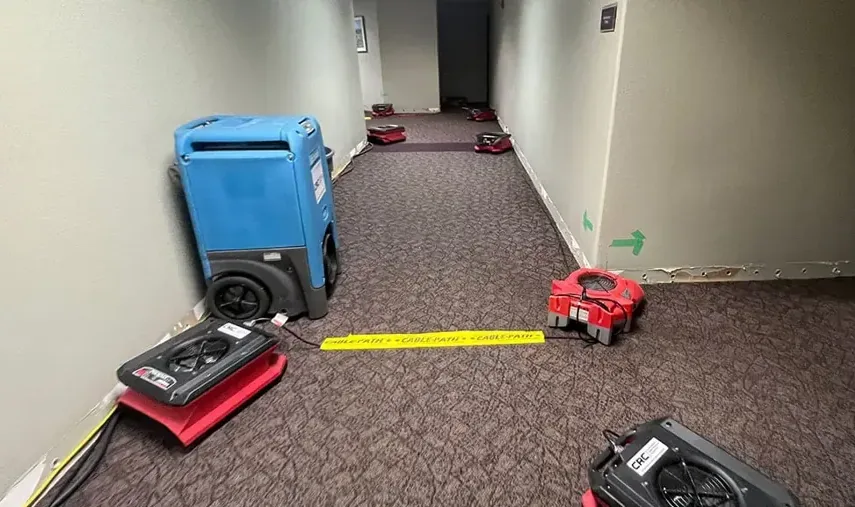
Dehumidifier and several air movers positioned along a carpeted hallway
Immediate priorities

Commercial Water Damage: first steps

  1. 1

    Name an authorized property contact

    Identify the person who can approve entry, removal and changes to the scope. A decision route helps coordinate tenants, facility staff and repair trades when the affected space serves several users.

  2. 2

    Separate occupants from the work

    Keep staff and visitors away from standing water, unstable finishes and electrical concerns. The manager identifies entrances and essential circulation routes. The assessment establishes safe access and occupancy restrictions during cleanup.

  3. 3

    Record affected operations and contents

    List rooms, stored materials and equipment reached by water. Photographs and location notes help prioritize inspection while preserving the condition of contents before movement changes their relationship to the original water path.

  4. 4

    Coordinate source and building repairs

    Arrange the appropriate trade for the failed plumbing, exterior opening or equipment. Restoration planning should account for that work and any permit or inspection needs affecting how repaired spaces return to use.

Assessment and control

How commercial water damage is handled

Rapid local response

The response team prioritizes active water movement and unsafe access. The first assessment separates source control from extraction, so a stopped leak does not leave hidden wet materials untreated.

IICRC S500 drying standard

The drying specialist sets a material-specific goal using unaffected reference readings. Airflow and dehumidification follow the evaporation load, with equipment adjusted when the daily measurements show a change.

Claim-ready documentation

The project file records the water source, affected rooms, material condition and work performed. Photographs and moisture logs let the owner and insurer examine the scope without relying on a dry-looking surface.

Local water experts

The site assessment checks the building actually affected, including access restrictions and shared assemblies. The restoration contractor distinguishes cleanup from plumbing, roof or equipment repair before recommending the next step.

Planning the cleanup

What does commercial water damage cost in Green Valley, AZ?

Commercial water damage costs in Green Valley depend on exposure, material volume and access within the occupied property. The estimate should describe extraction, cleaning, removal and drying, with operational coordination and reconstruction needs identified so the authorized contact can evaluate the complete work sequence.

A contained commercial room

$2,500 to $5,000
  • Limited affected finishes
  • Defined access route
  • Focused equipment setup

Several occupied spaces

$5,000 to $20,000
  • Multiple room boundaries
  • Contents movement planning
  • Expanded drying monitoring

Extensive property exposure

$20,000 to $50,000+
  • Broad material removal
  • Complex occupancy restrictions
  • Coordinated repair scheduling

Category, wet square footage, material class and the delay before drying determine the scope. Repairing the source and replacing finishes may add separate charges. Compare the assumptions with the water damage cost calculator.

Work sequence

Commercial Water Damage process

The crew records the starting condition, adjusts the equipment and verifies the result.

  1. 1

    Establish authority and building priorities

    The initial meeting identifies the decision maker, affected areas and activities that influence access. Safety findings determine which spaces need restrictions. The source assessment and room survey then create a practical scope, with clear approval arrangements for changes discovered as wet finishes are opened or equipment is moved during the work.

  2. 2

    Organize recovery around safe zones

    Work routes, contents handling and equipment locations are planned alongside the occupied parts of the property. The arrangement should preserve safe movement where possible without allowing normal activity through hazardous or contaminated areas. Each zone receives material decisions based on its exposure, avoiding assumptions that every room needs the same treatment.

  3. 3

    Monitor materials and communicate changes

    Extraction, cleaning and drying proceed according to the water source and retained assemblies. Progress findings are communicated to the authorized contact in terms of room condition and access needs. If concealed wetting expands the scope, the revised removal or equipment plan should be explained before it disrupts another part of the property.

  4. 4

    Prepare the operational and repair handoff

    The completion record identifies recovered surfaces, remaining reconstruction and source repair status. The responsible contractor confirms applicable permit closeout requirements for regulated work. Property management can then coordinate the next stage with a clear understanding of room readiness, rather than treating equipment removal alone as permission to resume every activity.

AuthorityOne clear approval route
OccupancySeparate affected work zones
ScopeRoom specific material decisions
HandoffCoordinate repairs and use

A hallway water loss can interrupt access to rooms that never became wet. Commercial recovery must therefore consider both the moisture footprint and the paths people use through the building. The inspection should establish a safe work arrangement before routine activity resumes around extraction or drying equipment.

Connect the building plan with scheduled use

Green Valley Recreation facilities host HOA meetings, classes and member activities. West Center includes an auditorium and kitchen, showing the different functions that can share a property. A loss in any similarly occupied building needs room specific decisions about contents, access and the activities that must be moved or suspended.

Canoa Hills on Camino del Sol and Santa Rita Springs on Via Rio Fuerte are additional major recreation centers. These community places provide context for shared building use. The restoration scope itself follows the affected property, with no assumption that an entire facility can remain open during work.

Give each change a clear approval path

Property managers, tenants and owners may control different decisions. The work should identify who authorizes removal and who arranges source repair, while keeping operational contacts informed about access changes. A documented approval route becomes especially useful when opening a wet wall reveals damage extending into another occupied area.

Contents handling also needs a plan. Stored items and equipment can obstruct wet surfaces, yet moving them without a record can make later decisions harder. Photographs, room labels and a controlled movement route help keep the loss understandable as the space is cleared for material recovery.

Use the final record to organize reopening

Pima County requires electronic permit and site development submittals. Depending on the regulated repair scope, closeout may include final inspections and a Certificate of Occupancy. The responsible contractor should confirm those requirements while management coordinates the building's return to its intended use.

Water extraction handles liquid recovery, while structural drying measures retained material progress. The commercial handoff should connect both with remaining repairs and occupancy restrictions, giving the authorized contact a practical record for scheduling the next stage rather than only an equipment inventory.

Practical answers

Commercial Water Damage questions in Green Valley, AZ

Can a business stay open during restoration?

That depends on safety, contamination and the ability to separate work from occupied areas. Some activities may need relocation or suspension. The access plan should be based on the actual building condition and reviewed as removal or equipment placement changes available routes.

Who approves changes discovered during cleanup?

The owner or manager should designate an authorized decision maker before work expands. Concealed wetting can change removal or drying needs. A clear approval route allows the revised scope to be explained and recorded while operational contacts receive the information needed to adjust access.

How are contents moved without losing track of damage?

Photographs and location notes preserve the starting condition before items leave a room. Handling should account for exposure and safe movement through the property. A contents record helps management evaluate cleaning or disposal decisions and coordinate storage without confusing unaffected items with damaged material.

Does a dry hallway mean adjacent offices are ready?

Adjacent spaces need assessment if water could have traveled beneath partitions or continuous flooring. Material readings help determine whether those rooms are ready. The inspection should identify their moisture boundaries and provide room specific findings before occupied areas are returned to normal use.

What role do permits play in the repair schedule?

The contractor handling regulated work should confirm Pima County requirements for the actual scope. Any necessary submittals, inspections and closeout belong in the schedule. Restoration records support the material handoff, while the relevant approval process addresses the permitted repairs and occupancy requirements.

What should management retain when equipment leaves?

Keep source repair details, photographs, material decisions and drying findings together. The final description should identify remaining reconstruction and any access restriction still in effect. That record helps management coordinate contractors and operational planning after the active moisture recovery stage has ended.

Service area

Commercial water damage coverage

Green Valley, AZ

Green Valley commercial assessments start with the authorized contact, affected rooms and occupancy needs. Shared facilities and business properties require access arrangements tailored to the actual source and building conditions.

The same service nearby: commercial water damage in Sahuarita, Corona de Tucson, Drexel Heights.

Water damage restoration in Green Valley · every town covered

24/7 water damage dispatch

Coordinate material recovery with the people using the building

Arrange an assessment that explains safe work zones, contents handling and drying requirements before repair schedules and occupancy decisions are finalized for the affected property.

(888) 949-8496Plan commercial cleanup access
(888) 949-849624/7 dispatch