Protect access while planning recovery

Commercial Water Damage in Vail

A wet business space affects more than finishes. Commercial cleanup needs a defined work area, clear decision makers and a material drying plan that accounts for occupants, contents and essential access.

(888) 949-8496Discuss the affected business space
Work zones organized Contents priorities recorded Repair responsibilities clarified
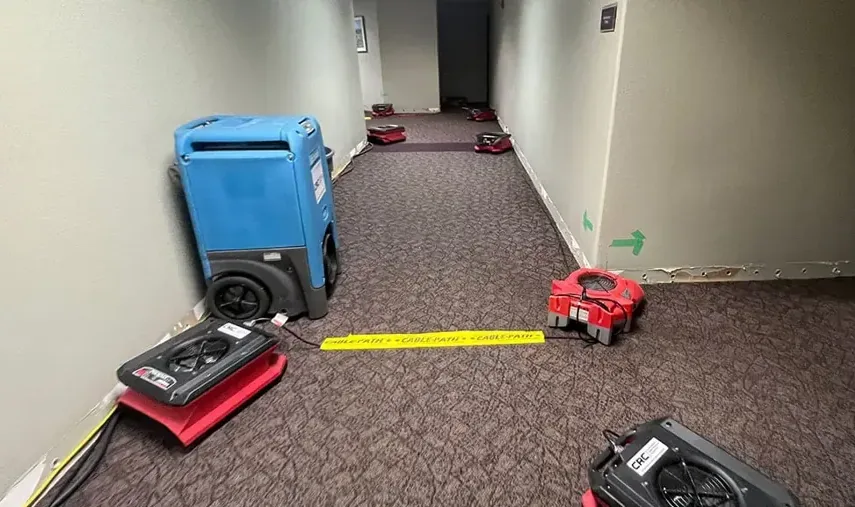
Dehumidifier and several air movers positioned along a carpeted hallway
Immediate priorities

Commercial Water Damage: first steps

  1. 1

    Identify the person responsible for access

    An authorized contact should coordinate entry and approval of necessary work. Clear responsibility helps avoid conflicting instructions about contents movement, equipment placement and the use of occupied areas.

  2. 2

    Separate wet routes from normal circulation

    Staff and visitors should remain away from standing water, unstable finishes and wet electrical equipment. The access plan needs to account for essential passageways before hoses, cords or removed materials are brought through the building.

  3. 3

    List contents that affect operations

    Records, furnishings and equipment may need priority assessment or protection. Describe their location and exposure without moving wet items into clean spaces, so contents decisions can be organized alongside the building cleanup.

  4. 4

    Share the source repair status

    The restoration assessment needs to know whether the leak continues and who is correcting it. Building contacts should also describe access restrictions and any affected systems that require separate professional evaluation.

Assessment and control

How commercial water damage is handled

Rapid local response

The response team prioritizes active water movement and unsafe access. The first assessment separates source control from extraction, so a stopped leak does not leave hidden wet materials untreated.

IICRC S500 drying standard

The drying specialist sets a material-specific goal using unaffected reference readings. Airflow and dehumidification follow the evaporation load, with equipment adjusted when the daily measurements show a change.

Claim-ready documentation

The project file records the water source, affected rooms, material condition and work performed. Photographs and moisture logs let the owner and insurer examine the scope without relying on a dry-looking surface.

Local water experts

The site assessment checks the building actually affected, including access restrictions and shared assemblies. The restoration contractor distinguishes cleanup from plumbing, roof or equipment repair before recommending the next step.

Planning the cleanup

What does commercial water damage cost in Vail, AZ?

Commercial water damage cleanup in Vail depends on affected materials, contents handling and the access constraints of the building. A written scope should distinguish source repair, mitigation and reconstruction. Work area separation and coordination around occupied spaces can change the practical effort required even within a contained loss.

A contained commercial room

$2,500 to $5,000
  • Defined work boundary
  • Focused contents protection
  • Accessible material drying

Several occupied spaces

$5,000 to $20,000
  • Coordinated access routes
  • Multiple drying areas
  • Broader operations planning

Extensive property exposure

$20,000 to $50,000+
  • Complex contents logistics
  • Large assembly assessment
  • Expanded repair handoff

Category, wet square footage, material class and the delay before drying determine the scope. Repairing the source and replacing finishes may add separate charges. Compare the assumptions with the water damage cost calculator.

Work sequence

Commercial Water Damage process

The crew records the starting condition, adjusts the equipment and verifies the result.

  1. 1

    Establish authority, access and the affected footprint

    The initial discussion identifies the building contact and the people responsible for source repairs, contents and work authorization. Inspection then maps water spread and immediate access concerns. This combination gives the project a practical starting point, with the physical loss and the communication responsibilities understood before equipment or removal work expands.

  2. 2

    Prioritize recovery around material and contents exposure

    Accessible water is removed while sensitive contents and obstructed surfaces receive attention. The sequence follows the water condition and safety needs, with separate handling for items that cannot simply remain in place. A written scope explains the priorities so building contacts can understand why certain rooms or tasks are addressed first.

  3. 3

    Arrange drying zones that fit the inspected building

    Equipment, access openings and work boundaries are planned around the retained materials. Necessary circulation and occupied spaces are considered where conditions allow separation. Monitoring tracks the affected assemblies, while changes in placement or access are communicated through the designated contact rather than improvised by different users of the building.

  4. 4

    Provide a handoff that supports reopening decisions

    The final assessment describes completed moisture work, remaining repairs and any areas still restricted by their condition. Records connect the affected footprint to the drying results and contents decisions. This gives the responsible parties a useful basis for coordinating reconstruction and return to use without treating a cleared floor as the whole recovery.

ContactDefine the decision maker
AccessSeparate work and circulation
ContentsRecord operational priorities
HandoffDocument remaining repair needs

Commercial restoration works best when the building conditions and decision process are clear at the same time. A wet corridor may affect access to rooms that received no water. Stored contents can block inspection, and separate repair providers may need to work within the same limited area.

Plan around the specific facility and its users

Rancho Del Lago Golf Course is a community facility in the Vail area. Other location references include Houghton Road and Colossal Cave. At any affected commercial property, the scope starts with its actual rooms, occupants and water path, with access arrangements explained before work alters normal circulation.

The responsible contact should identify spaces that support essential operations and contents needing special assessment. That information helps organize the work, but material safety and contamination remain part of the decision. Continued use of a separate area depends on the inspected conditions and the ability to maintain appropriate boundaries.

Give contents and building materials distinct decisions

A wet furnishing, stored record and wall assembly may need different handling. Moving everything into the nearest dry room can create new obstructions or spread affected water. A contents plan should describe what can remain protected in place, what needs movement and which route keeps clean spaces separate.

  • Equipment cords and extraction hoses should be considered within the agreed access arrangement.
  • Closed storage rooms may conceal wet flooring even when the main work area looks clear.
  • Changes in the source repair schedule should be shared with the person coordinating indoor restoration.

Connect the drying record to the return of use

Water extraction can remove visible pooling quickly within the work sequence, but retained assemblies may need continued structural drying. The scope should make that distinction so equipment and restricted areas remain connected to an explained material need.

Before the project moves into finish repairs, the completion record should describe the condition of the affected rooms and any remaining access limitations. Building contacts can then coordinate reconstruction, contents return and operations using the same account of the work rather than separate assumptions about what a cleared space means.

Practical answers

Commercial Water Damage questions in Vail, AZ

Can a business remain open during water cleanup?

Continued use depends on safety, contamination, essential access and the ability to separate affected spaces. Some buildings may support a controlled work zone, while others need broader restrictions. The decision should follow the inspection and be communicated through the responsible property contact as conditions change.

Who should coordinate instructions to the restoration team?

A designated authorized contact helps keep access, contents and scope decisions consistent. Other specialists may handle source repair or building systems, but their work should be coordinated through an understood process. This reduces conflicting directions about equipment placement, room use and the sequence of necessary repairs.

Why are dry corridors considered in the work plan?

A dry corridor may be needed for occupants, equipment access or contents movement. The plan should account for those uses before hoses, cords or removed materials enter it. Protecting circulation helps keep the cleanup organized and avoids turning unaffected spaces into unnecessary obstacles or exposure routes.

Are contents decisions separate from the building estimate?

Contents handling may be a distinct part of the scope because furnishings, records and equipment have different requirements from walls and floors. The estimate should explain the work included and any specialist assessment still needed. Clear item records help connect those decisions to the original water exposure.

What happens if hidden damage changes the scope?

The newly exposed condition should be documented and explained to the authorized contact. A revised plan can identify additional access, removal or drying needs and their effect on other work. Changes should remain tied to the inspected materials rather than appearing as unexplained additions at completion.

What supports the return of affected rooms to normal use?

The completion assessment should identify drying results, remaining reconstruction and any unresolved system or access issue. Responsible building parties can use that record to coordinate the return of contents and operations. The reopening assessment should account for material moisture, completed cleanup and repairs still needed for normal use.

Service area

Commercial water damage coverage

Vail, AZ

Commercial cleanup assessments serve Vail facilities and work spaces, including properties described by Rex Molly Road or Lava Peak Road. Authorized access and affected operations are discussed alongside material conditions.

The same service nearby: commercial water damage in Sahuarita, Corona de Tucson, Green Valley.

Water damage restoration in Vail · every town covered

24/7 water damage dispatch

Give the return to use a clear sequence

A documented scope links contents handling, drying and remaining repairs so building contacts can coordinate the affected spaces with a shared understanding of their condition.

(888) 949-8496Plan the commercial assessment
(888) 949-849624/7 dispatch