Moisture arriving beneath finished flooring

Slab Leak Cleanup in Corona de Tucson

Moisture emerging at a floor joint can be the visible end of a concealed leak. Assessment needs to separate source investigation from the damage already spreading above it.

(888) 949-8496Discuss moisture beneath the floor
Concealed source coordination Layered floor assessment Measured drying decisions
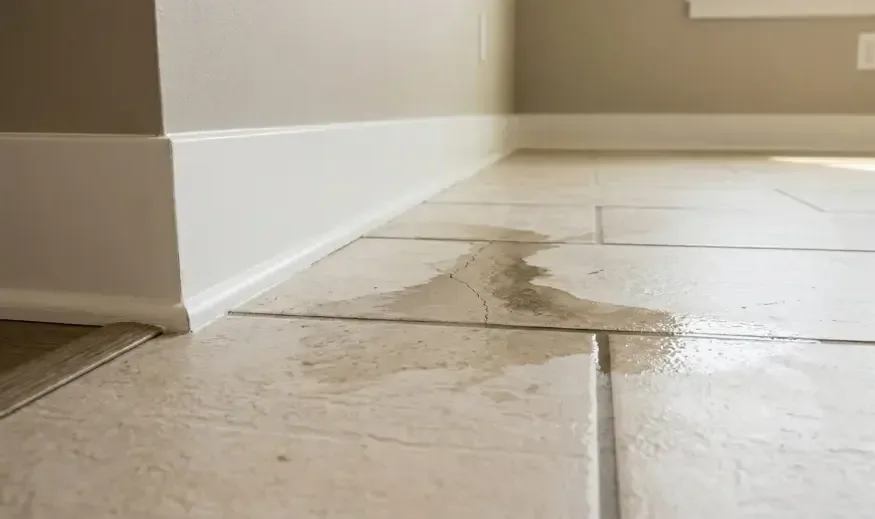
Water pooled across floor tiles beside a white baseboard and doorway
Immediate priorities

Slab Leak Water Damage: first steps

  1. 1

    Describe the first visible change

    Note whether moisture appeared at a tile joint, carpet edge or wall base. Record changes from a dry position without pulling flooring apart or assuming the nearest wet spot marks the source.

  2. 2

    Arrange appropriate source investigation

    A plumbing professional should evaluate a suspected concealed supply failure. Discuss safe water isolation and repair access before any floor opening, especially where electrical equipment or other concealed services may be present.

  3. 3

    Protect the inspection area

    Keep traffic off loose or lifted finishes and avoid stacking belongings over damp flooring. Clear access allows the moisture boundary to be assessed without hiding changes beneath rugs or stored items.

  4. 4

    Preserve material and repair records

    Photograph visible damage and keep source findings with the cleanup scope. The record should distinguish leak access, damaged finishes and drying needs before a replacement floor is selected.

Assessment and control

How slab leak water damage is handled

Rapid local response

The response team prioritizes active water movement and unsafe access. The first assessment separates source control from extraction, so a stopped leak does not leave hidden wet materials untreated.

IICRC S500 drying standard

The drying specialist sets a material-specific goal using unaffected reference readings. Airflow and dehumidification follow the evaporation load, with equipment adjusted when the daily measurements show a change.

Claim-ready documentation

The project file records the water source, affected rooms, material condition and work performed. Photographs and moisture logs let the owner and insurer examine the scope without relying on a dry-looking surface.

Local water experts

The site assessment checks the building actually affected, including access restrictions and shared assemblies. The restoration contractor distinguishes cleanup from plumbing, roof or equipment repair before recommending the next step.

Planning the cleanup

What does slab leak water damage cost in Corona de Tucson, AZ?

Slab leak restoration in Corona de Tucson depends on wet flooring layers, lower wall involvement and the access needed for drying. These planning ranges concern resulting water damage; leak detection, pipe repair and replacement finishes should be clearly identified when included or priced separately.

A limited wet floor

$1,500 to $3,000
  • Localized floor inspection
  • Accessible moisture recovery
  • Small drying boundary

Water across adjoining rooms

$3,000 to $7,500
  • Connected finish assessment
  • Selective layer access
  • Multiple room readings

Extensive concealed saturation

$7,500 to $15,000+
  • Broader material removal
  • Difficult drying access
  • Expanded moisture documentation

Category, wet square footage, material class and the delay before drying determine the scope. Repairing the source and replacing finishes may add separate charges. Compare the assumptions with the water damage cost calculator.

Work sequence

Slab Leak Water Damage process

The crew records the starting condition, adjusts the equipment and verifies the result.

  1. 1

    Compare symptoms across the assembly

    The inspection records visible floor changes and moisture in adjacent materials. Comparing several accessible locations helps outline the affected area while a plumbing professional investigates the source. The cleanup plan should identify both the known wet boundary and places needing access, rather than treating a single damp joint as the whole loss.

  2. 2

    Coordinate the opening and repair route

    Source repair may require access through a finish or another part of the property. Restoration planning accounts for that work so retained materials remain reachable and the repair area can be protected. Photographs distinguish source access from damage removal, making later estimates easier to evaluate and reducing confusion about the reconstruction boundary.

  3. 3

    Address trapped water above the slab

    Water held beneath floor coverings or at lower walls must be assessed separately from the plumbing defect. Damaged layers are considered for removal where their condition or arrangement prevents effective drying. Accessible surfaces are cleaned as appropriate, and the retained assembly receives a drying approach suited to its actual materials.

  4. 4

    Check readiness for replacement flooring

    Moisture testing continues after the visible seepage stops. Appropriate goals depend on the retained substrate and the proposed finish requirements. Records should show the tested areas and remaining limitations, allowing the flooring professional to evaluate installation readiness before adhesive, underlayment or another covering seals the surface again.

Visible clueDamp joints or edges
Source taskConcealed plumbing investigation
Restoration taskWet finish assessment
Before coveringSubstrate moisture assessment

A concealed leak can make the floor look like the source when it is actually the exit point. Moisture may appear at a seam, spread beneath a covering and reach the wall base. Corona de Tucson cleanup should investigate that pathway before deciding what to open or replace.

Read the floor as a layered assembly

The exposed finish is only part of the problem. Adhesives, underlayment and adjacent wall materials can hold water beyond the visible patch. An assessment should identify the materials present, compare accessible wet and unaffected areas and establish where additional access would answer a specific question about moisture or damage.

South Houghton Road provides a location reference for the community's commercial center. The proposed path segment between Camino del Toro and Forrest Feezor Street adds familiar corridor names when arranging a property visit. Once inside, the relevant map is the pattern of wet joints, changed finishes and affected adjoining rooms.

  • Tile edges that remain damp after wiping may indicate moisture continuing to emerge from beneath the finish.
  • A softened baseboard can require inspection even when the center of the room appears dry.
  • Covering a damp patch with a rug hides changes and restricts useful observations during source investigation.
  • Removing a finish should serve a defined inspection, repair or drying purpose within the written scope.

Keep detection and restoration responsibilities clear

A source specialist identifies and repairs the plumbing failure. Restoration assesses the released water and its effects on the building. The two tasks need coordination, particularly where repair access crosses retained flooring. A documented boundary prevents the smallest necessary pipe opening from being mistaken for the complete extent of water damage.

If liquid has reached an accessible room surface, water extraction can reduce that load. Where wood finishes are involved, hardwood floor assessment addresses moisture differences and physical movement within the affected floor rather than assuming immediate refinishing will solve the damage.

Replacement needs more than a clean appearance

The repaired area may look ready while the substrate still holds excess moisture. Finish selection and installation requirements should be considered before the surface is covered. Keep final readings and repair findings together so the next trade can evaluate the actual conditions instead of relying on elapsed time or appearance alone.

Practical answers

Slab Leak Water Damage questions in Corona de Tucson, AZ

Does water at a tile joint identify the pipe location?

It identifies a visible moisture exit, which may be separate from the plumbing defect. Water can travel beneath a finish before emerging. Source investigation and moisture mapping should be coordinated so repair access addresses the failed component while restoration covers the actual wet floor and adjoining materials.

Are all homes here treated as slab construction?

The assessment uses the construction present at the affected property. Floor layers, accessible spaces and the plumbing arrangement determine the investigation and drying approach. A cleanup plan should describe those observed conditions so removal and equipment choices suit the building rather than a general assumption about housing.

Can a floor be dried without taking it apart?

Retention depends on the finish, trapped moisture, damage and available drying access. Some assemblies allow targeted drying, while others require selective removal to reach wet layers. The estimate should explain that decision and identify how progress will be measured before the floor is approved for later repair.

Why do nearby walls need checking after a floor leak?

Water can reach the wall base and enter trim, wallboard or a concealed cavity. That damage may sit outside the obvious floor patch. Checking adjoining materials helps establish a complete restoration boundary and reduces the chance that a newly repaired floor is surrounded by still wet finishes.

Does the displayed price include finding the hidden leak?

The ranges describe water damage restoration planning. Detection, plumbing repair and rebuilding can be separate work, depending on the written estimate. Ask for each responsibility to be listed so the total proposed scope is understandable before source access or substantial removal begins inside the property.

When can replacement flooring be installed over the area?

Installation should follow source correction and appropriate moisture evaluation of the substrate. The flooring professional needs conditions compatible with the chosen materials and installation system. Drying records and source repair documentation support that assessment; a surface that merely feels dry is an incomplete basis for covering it.

Service area

Slab leak water damage coverage

Corona de Tucson, AZ

Corona de Tucson slab leak damage requests should describe the property's floor symptoms, source investigation status and access using familiar corridors such as South Houghton Road.

The same service nearby: slab leak water damage in Sahuarita, Vail, Green Valley.

Water damage restoration in Corona de Tucson · every town covered

24/7 water damage dispatch

Connect concealed leakage with a clear restoration scope

A useful plan identifies the wet layers, the access needed and the conditions required before new flooring is installed. Begin with the symptoms visible at the property.

(888) 949-8496Discuss floor layer drying
(888) 949-849624/7 dispatch